
AMIRI on Resale: Which Pieces Hold Value
This is a description of observed secondary-market behaviour and it is not investment advice, so nothing here should be read as a forecast of returns. Asking prices and public listings seen on resale platforms in 2026 are the source, the samples are small, and the indication is directional at best. The position AMIRI occupies on resale is unusual, since the brand carries genuine demand while discounting heavily through authorised retail, and that caps what anyone will pay secondhand. Listings titled amiri jeans, amiri hoodie, amiri men or simply amiri run into the hundreds on the larger platforms at any moment. A consistent pattern emerges, and it is slightly deflating if you were hoping to treat clothing as an asset. The bulk of pieces trade below retail, a minority sit close to it, and only a few of genuinely scarce items do better. The rest of this piece is a map of that terrain, not a price guide.
Where the Secondary Market Sits
Most of the volume sits with a handful of venues, and each has a different centre of gravity. Denim depth is held by Grailed, which is also where model-specific browsing actually works, carrying dedicated pages for the MX1, the MX2, the Thrasher and the Skel Top. StockX is the one built around sneakers: it publishes release dates and original retail figures alongside current bids, and that makes it the only place where price history is legible. Vestiaire Collective and The RealReal favour womenswear, outerwear and handbags, and each runs authentication steps of its own. eBay, Poshmark and GOAT each hold meaningful quantities, but none of them dominates a category. Because a hoodie priced sensibly on a denim-heavy platform can sit unsold amiri online shop for months, where a piece is listed matters nearly as much as what is listed. Buyers search by model name; omit the model from a listing and it is effectively invisible.
What amiri jeans Actually Fetch
The MX1 makes the useful reference point, being the signature jean and, by a wide margin, the most listed model. Roughly $400 to $840 covers the observed asking prices and sales on the largest denim platform, with the bulk clustering somewhere around $480 to $650. Put beside an observed retail figure of $1,090, the picture leaves little room for doubt, since standard MX1s resell materially below their original price. Suede and other unusual-material variants turned up at the low end of that range, suggesting that specialised materials depreciate harder rather than commanding a premium. The Stack, the entry point to core denim at an observed $750, follows the same shape at a lower level. The jeans are not a poor purchase because of any of this; they are simply clothing rather than a store of value. Small sample, peer-to-peer venue: interpret these as ranges and not as valuations.
Sneakers Behave Differently
Resale mechanics are best documented in footwear, largely because sneaker platforms publish release and retail history. The Skel-Top Low, which the brand itself calls its house signature sneaker, recorded an original retail of $590 at an August 2020 release and shows an observed price of $650 in 2026. Trading is active across multiple colourways, though the standard ones generally do not hold a premium over retail. For a luxury sneaker that stays in production and is restocked in familiar colours, that is the entirely normal result. Limited colourways and collaboration footwear are the exception and behave more like scarcity-driven products. Separate silhouettes from the Skel-Top, the Skel Court and the Stars Court should not be read across, because they carry different appliqués and different observed prices. The MA-1 in this line is a sneaker rather than a bomber jacket, and confusing the two produces mispriced listings on both sides.
Observed Asks Set Against Retail
Gathered in the table are the figures used above, so the gap between primary and secondary pricing can be seen in one place. Every number is an observed market listing from 2026 rather than an official price list, and the resale column describes ranges seen on public platforms rather than guaranteed outcomes. The sample sizes behind those ranges are small, and asking prices are not the same thing as completed sales. Far more than any brand-level generalisation, it is condition, size and colour that move individual outcomes. Sizes at the extremes of a run tend to sit longer, which drags their asking prices down over time. The right-hand column is a rough band, not a boundary, so plenty of individual listings will sit outside it.
| Item | Observed retail | Observed resale behaviour |
|---|---|---|
| MX1 jean | $1,090 | Roughly $400 to $840, clustering $480 to $650 |
| Stack jean | $750 | Consistently below retail |
| Skel Top Low | $650, and $590 at the 2020 release | At or near retail, seldom above in core colours |
| Skel Court Hi | $690 | Low volume, usually below retail |
| MA-1 sneaker | $799 | Below retail for standard colours |
| MA Core Logo Hoodie | $650 | Well below retail, high supply |
| Women’s Baggy MX3 | $990 | Limited data, thin listing volume |
| Ryder Boot | $1,090 to $1,290 | Under retail, and condition-sensitive |
What Tends to Hold Value
One quality unites the pieces that resist depreciation: they are hard to reproduce at volume. Heavily worked denim comes at the front, crystal-embellished, studded, patchwork and hand-reconstructed, with visible labour and something close to a one-off feel. Runway and collaboration items form the second group, and the February 2022 collaboration with the artist Wes Lang is the clearest example of that category. Archive-era pieces from the early period, before the Paris Fashion Week debut in 2018, make up a third group, simply because supply from those years is genuinely scarce. In footwear, limited colourways and collaboration models hold better than the core palette. Scarcity plus labour is the common thread, and neither of those describes a seasonal logo product. Treat this as an observed pattern rather than a rule, because any individual listing can contradict it.
What Falls the Hardest
At the other end sit the items that are produced in the greatest numbers and discounted most aggressively at retail. Losing the most ground are core logo T-shirts and standard logo hoodies, which are high-volume, heavily counterfeited and routinely marked down while still current. Next comes standard-wash core denim, precisely because it is continuously restocked and a buyer can always sit tight for the next sale. Anything that reached an off-price channel while still recent effectively has its ceiling set in public, and resale buyers price accordingly. Because widely produced colourways compete against each other on the same platform, asking prices grind down. Womenswear and kids’ pieces have thinner comparable data, so their listings tend to sit longer rather than clear at a stable number. If you are buying to wear, this group is where the secondary market is genuinely useful.
The Discount Floor Beneath It All
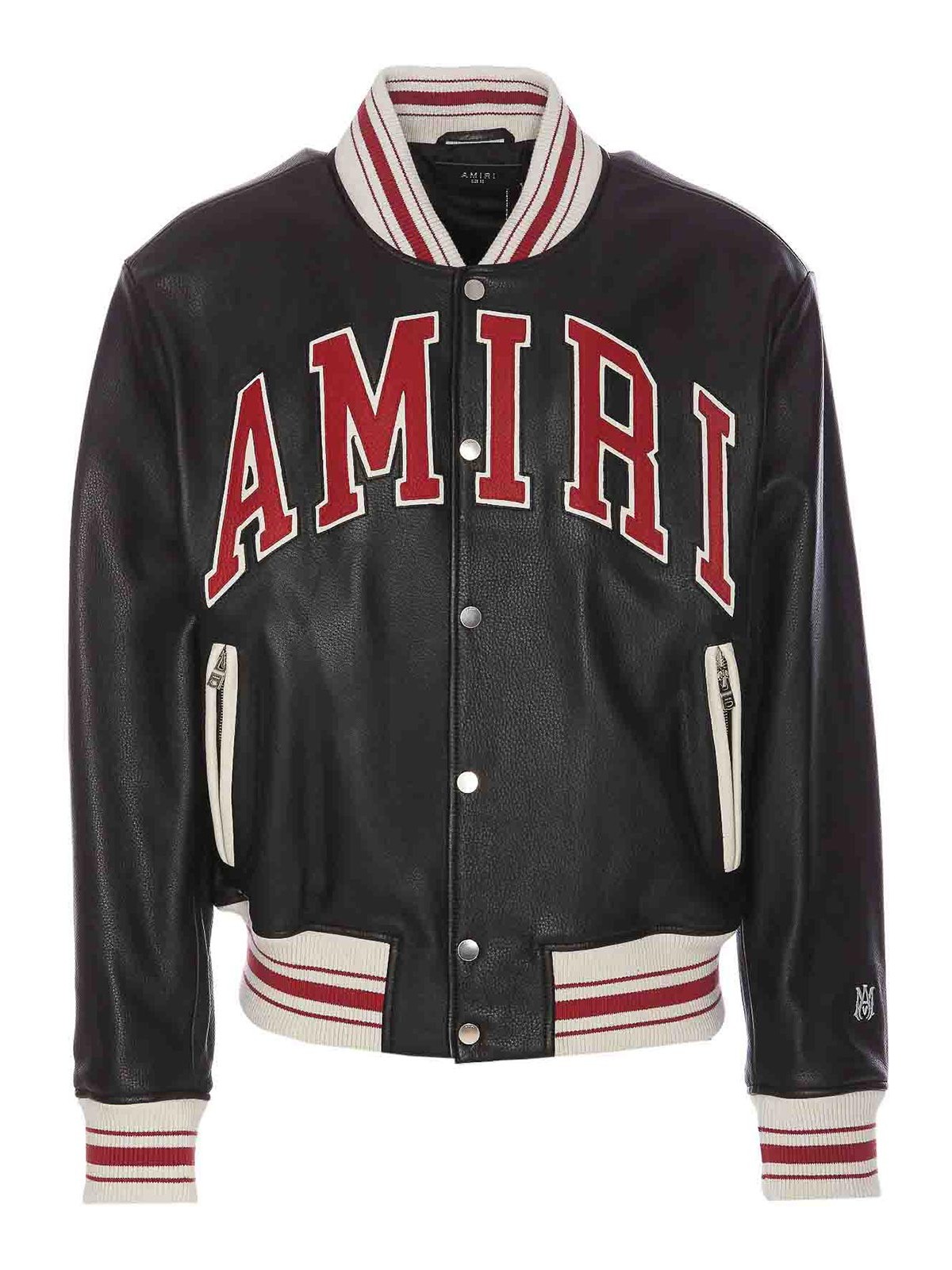
One structural driver explains all of the above, which is that authorised retail discounts amiri clothing in plain sight and often. Observed in-season reductions at multi-brand retailers run in the region of forty to seventy percent, and off-price arms of established retail groups carry past-season stock on top of that. A jean listed at $1,345 seen at $673, or a varsity jacket listed at $2,310 seen at $1,155, sets a public reference that every resale buyer can find. For a piece still available new somewhere, no secondary seller can price above that floor. Counterfeit density drags a second time, because authentication risk gets discounted even when a listing is genuine. Verification from the brand extends only to products bought directly from it or through an authorised stockist partner, and it states plainly that it cannot authenticate items bought outside those channels. The gap is priced into the market, and it partly explains where resale sits.
How to Read These Numbers
Every figure in this article is an observation, based on a small number of public listings at one moment in 2026. An asking price is not a sale, a sale is not a trend, and a handful of listings is not a market. What you have read is not investment advice; no return is being predicted, and clothing should not be bought on the expectation that it will appreciate. The sensible use for this material is negotiation and expectation-setting: knowing that a standard MX1 clusters well under retail is worth more than any forecast. Sellers should name the model, photograph the interior labels, and price against completed listings rather than optimistic ones. Before you buy amiri online secondhand, weigh the authentication risk against the discount, since provenance is what actually protects you. Buy what you want to wear, and treat any resale upside as an accident rather than a plan.
